

Why 2026 is the Year of Multi-Agent Systems in Scandinavian FinTech
For the last few years, artificial intelligence in fintech has largely meant assistants – chatbots, copilots, and recommendation engines that support humans. These tools improved productivity, but they still depended heavily on manual decision-making.
In 2026, that model is changing. Fintech companies across Scandinavia are beginning to adopt multi-agent systems – groups of AI agents that can work together, make decisions, coordinate actions, and operate within defined rules. This shift marks a move from AI that assists to AI that acts.
Scandinavian fintech ecosystems, known for digital maturity and trust-driven innovation, are especially well positioned to lead this transition.
From Single AI Assistants to Multi-Agent Systems
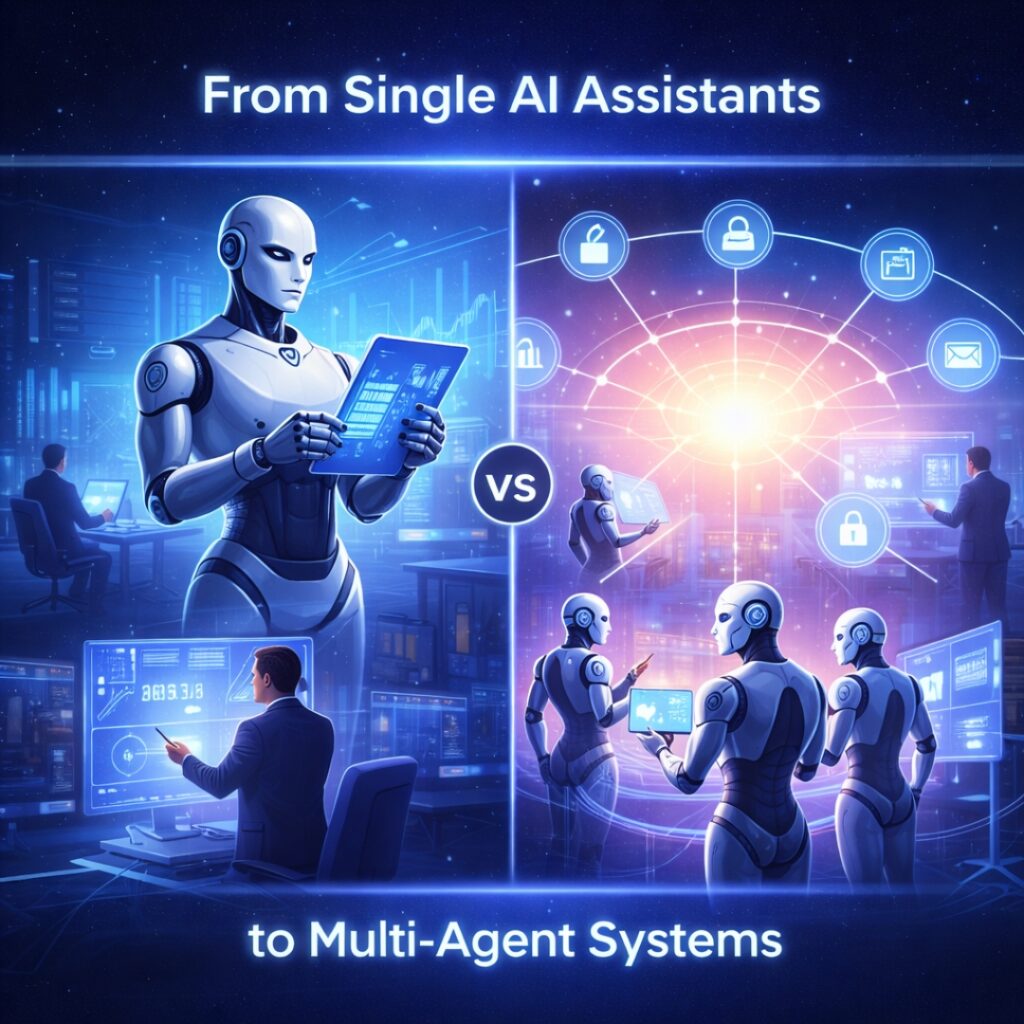
An AI assistant works like a smart helper. It answers questions, analyzes data, or suggests actions — but it waits for human approval.
A multi-agent system, on the other hand, functions more like a team. Each agent has a specific role:
- One agent gathers and validates data
- Another analyzes risk
- Another checks compliance rules
- Another executes or recommends actions
An orchestration layer coordinates these agents, ensuring they work together toward a shared goal. The result is faster execution, and more consistent decision-making.
For fintech, where speed, accuracy, and accountability matter, this approach is far more scalable than relying on a single AI model.
Why 2026 Is the Turning Point
Multi-agent systems have existed in theory for years, but 2026 marks the point where they become practically viable for real fintech operations.
Several factors are driving this shift:
- Mature AI infrastructure that supports orchestration and monitoring
- Better model reliability and reasoning capabilities
- Improved auditability, making AI decisions easier to review
- Clearer regulatory expectations around AI usage
- Stronger business pressure to automate complex financial workflows
Together, these changes have moved multi-agent systems from experimentation into production.
Why Scandinavia Is Leading the Way
Scandinavian countries offer a unique environment for agent-based fintech systems.
First, the region has advanced digital banking and open banking adoption. APIs, real-time payments, and standardized data access make it easier for AI agents to interact safely with financial systems.
Second, Scandinavian fintech culture emphasizes trust, transparency, and governance. While this may seem restrictive, it actually supports better agent design. Systems are built with logging, controls, and accountability from the start.
Third, regulators in the region are relatively collaborative and forward-looking. Fintech companies are encouraged to innovate — as long as risk is understood and managed.
This balance of innovation and responsibility makes Scandinavia an ideal testing ground for multi-agent finance.
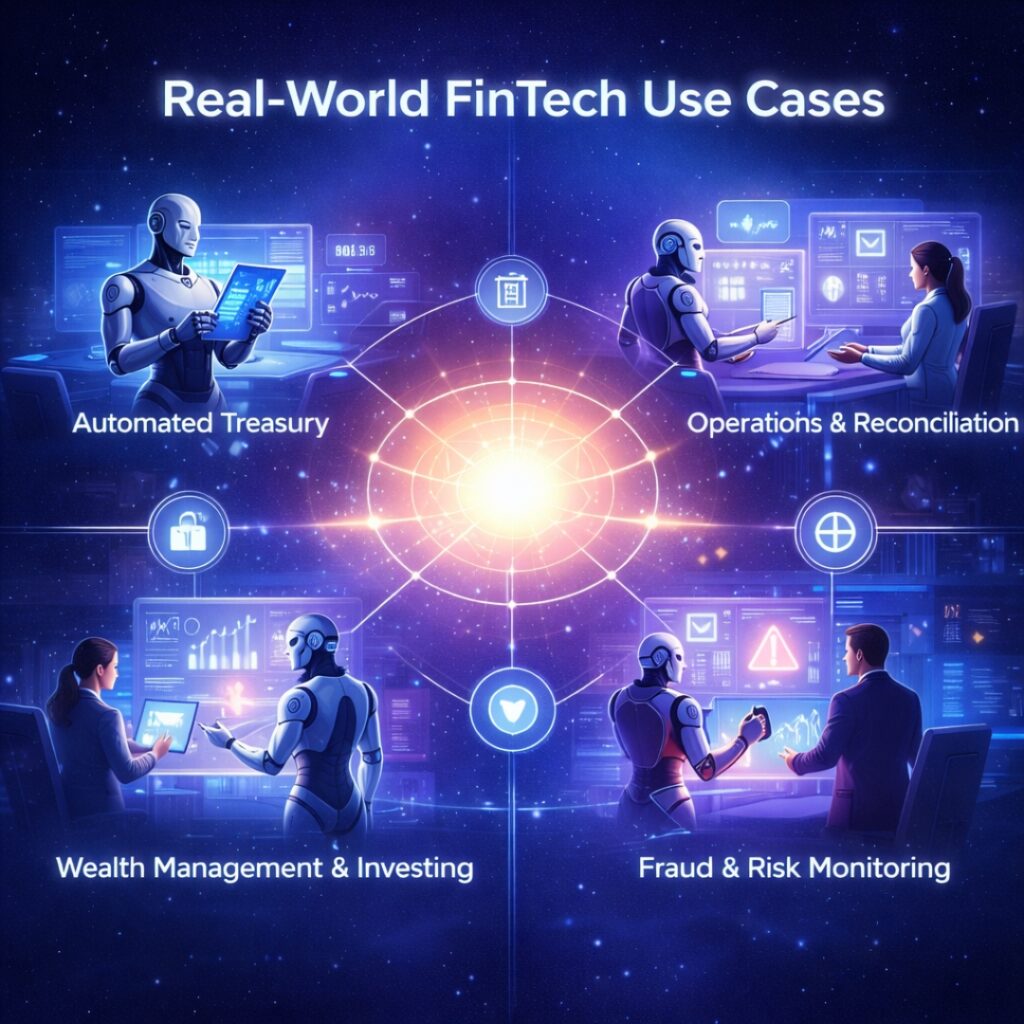
Real-World FinTech Use Cases
Multi-agent systems deliver the most value where multiple decisions must happen quickly and consistently.
Automated Treasury and Cash Management
Agents can monitor balances, forecast cash needs, track interest rates, and recommend or execute transfers automatically — reducing idle cash and financing costs.
Reconciliation and Operations
Instead of manual reconciliation, agents can fetch transaction data, match records, flag exceptions, and even initiate resolution workflows.
Wealth and Portfolio Management
Agent teams can analyze markets, assess risk exposure, validate compliance rules, and assist advisors with near-real-time insights — without replacing human judgment.
Governance: Making Agents Trustworthy
With more autonomy comes more responsibility.
Multi-agent systems introduce new challenges, such as unexpected interactions between agents or unclear decision paths. Scandinavian fintech firms are addressing this by focusing on governance by design.
Key principles include:
- Clear limits on what agents can do autonomously
- Human approval for high-impact decisions
- Transparent decision logs
- Well-defined escalation paths
- Continuous monitoring and testing
This approach ensures that agents remain reliable partners, not uncontrolled actors.
The Role of LoreMine Technologies in the Agent-First FinTech Era
As fintech companies adopt multi-agent systems, success depends not only on AI models, but on how well the overall system is designed to evolve.
LoreMine Technologies aligns itself with this long-term perspective. Rather than treating AI as a one-time feature, LoreMine focuses on how modern platforms adapt over time – especially as intelligence becomes more distributed and autonomous.
In the context of multi-agent systems, this mindset helps fintech organizations:
- Prepare existing platforms for gradual AI adoption
- Think in terms of ecosystems instead of isolated tools
- Balance innovation with reliability and trust
- Build systems that can grow alongside regulatory and business changes
As 2026 becomes a defining year for agent-based fintech in Scandinavia, this kind of forward-looking technology alignment becomes increasingly valuable.
Do you have an interesting project to talk about?
Contact us right away.
How FinTech Leaders Can Get Started
For organizations new to multi-agent systems, the key is to start small.
A practical approach includes:
- Choosing a single, high-impact workflow
- Breaking it into clear agent responsibilities
- Defining boundaries and approval rules
- Running agents in parallel with existing processes
- Measuring outcomes before expanding scope
This reduces risk while building internal confidence and understanding.
Final Thoughts
2026 is not about replacing humans with AI. It’s about redefining how work gets done.
Multi-agent systems allow fintech organizations to automate complexity, respond faster, and scale decision-making – without sacrificing trust or control. Scandinavia’s digital maturity, regulatory clarity, and innovation culture make it the perfect environment for this transition.
The fintech companies that succeed will be those that move beyond assistants, embrace coordination, and build systems designed for continuous intelligence.