

Why Adaptive Software Development Matters in Today’s Digital Economy
The digital economy has transformed how businesses operate, compete, and innovate. Organizations must now respond quickly to evolving technologies, changing market demands, and rising customer expectations. Traditional software development models that depend on fixed requirements and long development cycles often struggle to keep pace with these dynamic conditions.
Businesses increasingly need development approaches that support rapid adaptation, experimentation, and continuous improvement. Adaptive Software Development (ASD) addresses these needs by emphasizing flexibility, collaboration, and iterative learning throughout the development process.
In this rapidly evolving environment, Adaptive Software Development provides a practical framework for building resilient and scalable digital solutions. Companies like LoreMine Technologies support this approach by helping businesses design adaptable software architectures, modernize existing systems, and implement development processes that evolve with changing business and technology needs. Let’s explore Adaptive Software Development and why it is essential in today’s digital economy.
Understanding Adaptive Software Development
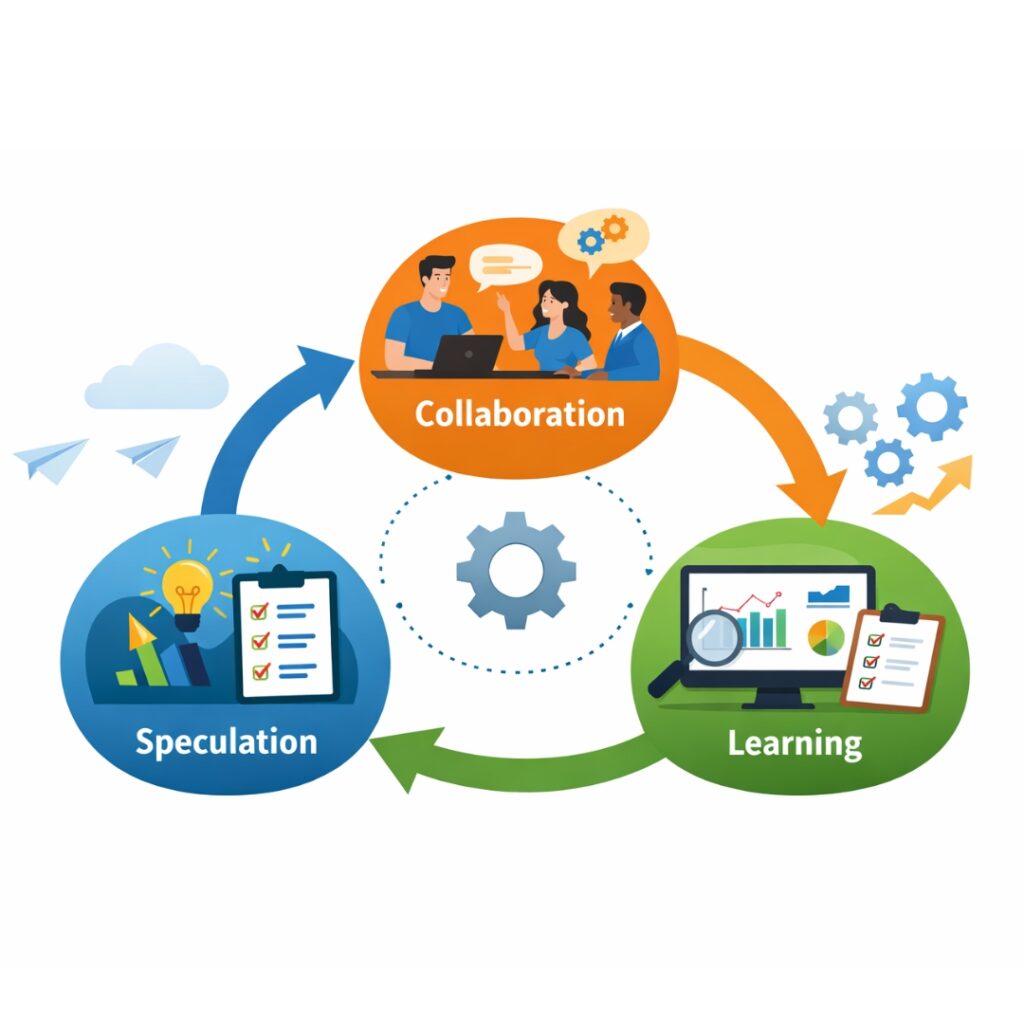
Adaptive Software Development is a development methodology designed to handle uncertainty and complexity in software projects. Instead of assuming that all requirements can be fully defined at the beginning, ASD acknowledges that software development is an evolving process where learning and feedback play a crucial role.
The methodology is built around a continuous cycle of speculation, collaboration, and learning. In the speculation phase, development teams define project goals and create flexible plans based on available information. Collaboration involves close interaction between developers, stakeholders, and users to refine the product during development. The learning phase focuses on reviewing results, analyzing feedback, and applying insights to improve future iterations.
This iterative cycle allows teams to adjust their approach as new information emerges, ensuring that the final product aligns closely with real business needs.
Why Adaptability Is Critical in the Modern Digital Economy
The digital economy moves at an unprecedented pace. Emerging technologies such as cloud computing, artificial intelligence, and data analytics are continuously reshaping industries. At the same time, businesses must respond to rapidly changing customer expectations and evolving market conditions.
Adaptive Software Development helps organizations remain responsive in this fast-changing environment. Rather than waiting for a fully completed product, teams deliver incremental updates that can be tested and improved continuously. This allows organizations to introduce new features faster, gather real-world feedback, and make adjustments without disrupting the entire development process.
Handling the Growing Complexity of Modern Software Systems
Modern software systems often involve multiple integrations, distributed architectures, and evolving technology stacks. Applications must interact with cloud platforms, third-party services, APIs, and large volumes of data.
Adaptive Software Development provides an effective approach for managing this complexity. Instead of attempting to design every aspect of the system in advance, teams build and refine software incrementally. Each development cycle provides insights into system behavior, performance, and potential improvements.
Developers can gradually optimize architecture, refine system integrations, and address technical challenges as they arise. As technologies evolve or business priorities shift, the software can be adapted without requiring major disruptions or complete redesigns.
Development Fuels Continuous Learning and Innovation
In the digital economy, innovation is a key driver of competitive advantage. Organizations must constantly explore new technologies, improve their digital experiences, and develop innovative solutions to meet customer expectations.
Adaptive Software Development promotes a culture of continuous learning. Each development cycle offers an opportunity to gather feedback, test new ideas, and refine existing solutions. Instead of relying on rigid project plans, teams are encouraged to experiment, learn from results, and improve the product over time.
Thus, organizations can innovate more effectively while minimizing the risks associated with large-scale development projects.

Reducing Risk in Software Projects
Software projects often involve uncertainties related to technology, integration challenges, and evolving requirements. Traditional development approaches attempt to minimize these risks through detailed upfront planning. However, when assumptions change, these rigid plans can lead to delays and costly revisions.
Adaptive Software Development addresses this challenge by breaking projects into smaller development cycles. Each iteration delivers a working component that can be evaluated and improved based on feedback. This approach allows potential issues to be identified early and resolved before they escalate into major problems.
By continuously validating assumptions and incorporating feedback, ASD significantly reduces the risk associated with complex software initiatives.
Supporting Digital Transformation Initiatives
Many organizations are currently undergoing digital transformation, modernizing legacy systems and adopting advanced technologies such as cloud platforms, AI, and automation. These initiatives often involve uncertainty, evolving requirements, and complex technical challenges.
Adaptive Software Development provides the flexibility needed to support such initiatives. Instead of attempting to predict every aspect of the transformation process, organizations can adapt their development strategy as new insights emerge.
This ensures that transformation projects remain aligned with business objectives while allowing organizations to take advantage of new technologies and opportunities as they arise.
How LoreMine Can Help with Adaptive Software Development
Successfully implementing Adaptive Software Development requires both technical expertise and the ability to manage evolving project requirements. This is where LoreMine Technologies can play a valuable role.
LoreMine helps organizations adopt adaptive development practices that enable faster delivery, improved collaboration, and scalable software solutions. With experience in modern development frameworks, cloud technologies, and enterprise application development, the team works closely with clients to build systems that can evolve with changing business needs.
From modernizing legacy applications to developing new digital platforms, LoreMine focuses on creating flexible architectures and iterative development processes that support long-term growth. By combining technical expertise with an adaptive development mindset, the company helps businesses navigate complex software projects with greater confidence and efficiency.
Final Thoughts
In today’s digital economy, the ability to adapt quickly is essential for business success. Markets evolve rapidly, technologies continue to advance, and customer expectations grow more sophisticated every year.
Adaptive Software Development provides a practical approach to building software in such an environment. By emphasizing flexibility, collaboration, and continuous learning, ASD enables organizations to manage complexity, reduce project risks, and innovate more effectively.
For businesses seeking to remain competitive and future-ready, adopting adaptive development practices is no longer optional. It has become a critical strategy for delivering software solutions that can evolve alongside the rapidly changing digital landscape.
Do you have an interesting project to talk about?
Contact us right away.