

How to Modernise Legacy SaaS Platforms for Better Performance
Legacy SaaS applications often begin as reliable platforms that support growing businesses. However, as technology evolves and user expectations increase, many older SaaS systems struggle to keep up. Slow performance, outdated architecture, scalability limitations, and integration challenges can eventually impact both user experience and business growth.
Modernising legacy SaaS platforms are no longer just a technical upgrade—it is a strategic business decision. Companies that modernise their platforms can improve performance, enhance security, reduce maintenance costs, and create a stronger foundation for future growth.
In this blog, we’ll explore why SaaS modernisation matters, the common challenges businesses face, and the best approaches to improving legacy SaaS applications for better performance and scalability.
When Legacy SaaS Applications Become a Bottleneck
Many SaaS platforms were built years ago using technologies and architectures that were suitable at the time. As user demands increase and new features are introduced, these systems often become difficult to maintain and scale.
Common issues in legacy SaaS applications include:
- Slow application performance
- Outdated frameworks and infrastructure
- Poor scalability under growing user loads
- Security vulnerabilities
- Integration limitations with modern tools and APIs
Over time, these issues can negatively affect customer satisfaction and operational efficiency. Businesses may also struggle to launch new features quickly because outdated systems become increasingly complex and fragile.
Warning Signs Your SaaS Platform Is Outdated

Not every older SaaS platforms requires a complete rebuild. However, there are clear signs that indicate your SaaS application may need modernisation.
Performance and Scalability Issues
If your application becomes slower as user traffic increases, it may indicate architectural limitations or inefficient infrastructure design.
High Maintenance Costs
Legacy systems often require constant fixes and manual intervention, increasing operational expenses over time.
Difficulty Integrating New Technologies
Modern SaaS applications rely heavily on APIs, automation, cloud services, and AI integrations. Older systems may struggle to support these capabilities.
Poor User Experience
Outdated interfaces and inconsistent performance can drive users toward competitors with more modern platforms.
Recognising these issues early allows businesses to modernise strategically rather than reacting after major failures occur.
How Modernisation Improves SaaS Performance and Scalability
Modernisation improves more than just application speed. It enhances the overall stability, scalability, and future readiness of your platform.
Improved Performance
Modern cloud-native architectures and optimised databases significantly improve response times and reliability.
Better Scalability
A modern SaaS application can efficiently handle growing users, data, and traffic without major disruptions.
Enhanced Security
Updating outdated technologies helps reduce vulnerabilities and improves compliance with modern security standards.
Faster Feature Development
Modern development frameworks and structured architectures allow teams to release new features more quickly and efficiently.
Lower Long-Term Costs
Although modernisation requires investment, it often reduces maintenance complexity and infrastructure inefficiencies in the long run.
Smart Strategies for Modernising Legacy SaaS Platforms
Modernising legacy SaaS platforms does not always mean rebuilding everything from scratch. The right approach depends on your platform’s architecture, business goals, and technical challenges.
- Infrastructure Modernisation
Many legacy applications still operate on outdated hosting environments that limit performance and scalability.
Migrating to cloud platforms like AWS provides:
- Better scalability
- Improved reliability
- Enhanced disaster recovery
- Cost-efficient resource management
Cloud-native infrastructure also supports modern deployment practices such as auto-scaling and containerisation.
- Application Refactoring
In many cases, the core application logic remains valuable, but the codebase requires restructuring and optimisation.
Refactoring helps:
- Improve maintainability
- Reduce technical debt
- Increase application performance
- Simplify future development
This approach is often more cost-effective than a complete rebuild while still delivering substantial improvements.
- UI and User Experience Modernisation
User expectations have changed significantly over the years. Modern SaaS applications require clean, responsive, and intuitive interfaces.
Improving UI/UX can:
- Increase user retention
- Improve productivity
- Enhance customer satisfaction
Modern frontend technologies such as React and Vue can significantly improve responsiveness and user experience.
- API and Integration Enhancements
Modern SaaS platforms rely heavily on integrations with third-party services, payment systems, CRMs, analytics platforms, and AI tools.
Legacy applications often struggle with:
- Limited API support
- Integration instability
- Data synchronisation issues
Modernisation helps establish a stronger API-first architecture that supports future integrations more effectively.
The Role of AI in Modern SaaS Platforms
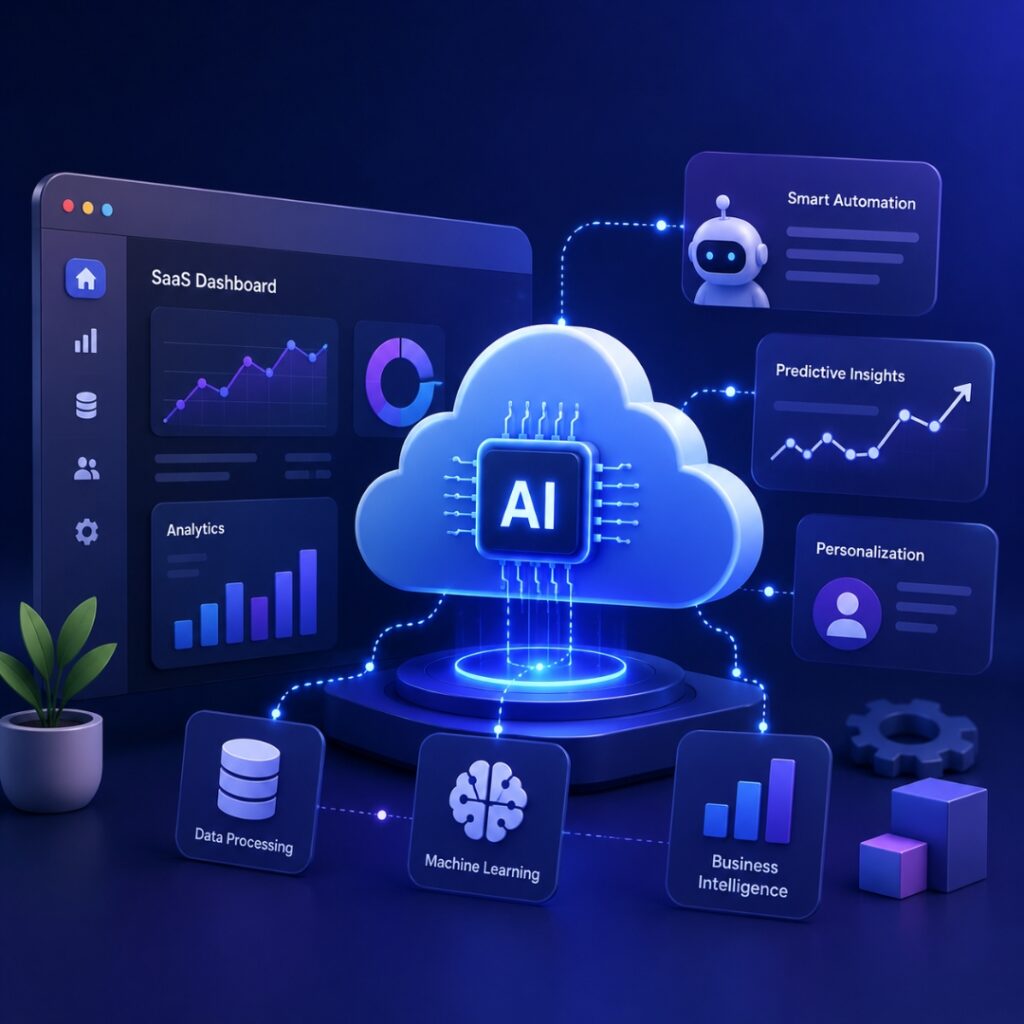
AI capabilities are becoming increasingly important in SaaS platforms, enabling automation, intelligent workflows, and predictive insights.
However, integrating AI into legacy applications can create challenges such as:
- Performance instability
- Poor model integration
- Increased infrastructure complexity
Modernising the platform architecture ensures AI features can operate more efficiently and reliably. Businesses also benefit from improved scalability when AI workloads increase.
A development team experienced in both SaaS engineering and AI optimisation can significantly reduce these implementation risks.
Why the Right Development Team Matters?
Modernising a SaaS application is a complex process that requires strategic planning, architectural expertise, and structured execution.
The right development team should understand:
- SaaS architecture
- Cloud infrastructure
- Scalability best practices
- Performance optimisation
- Modern development frameworks
Equally important is the delivery approach.
Structured development models such as Project-Oriented Delivery (POD) help ensure:
- Clear ownership of development tasks
- Faster execution
- Better collaboration
- Consistent quality throughout the modernisation process
With dedicated cross-functional teams, businesses can modernise applications more efficiently while reducing operational risks.
Looking to Modernise Your SaaS Application?
At LoreMine, we help businesses modernise and scale legacy SaaS platforms through dedicated offshore engineering teams and our structured POD delivery model.
From cloud migration and architecture optimisation to AI integration and performance improvement, our experienced SaaS engineers help businesses transform outdated systems into scalable, high-performance platforms.
Talk to our engineers today to modernise your SaaS platform
Final Thoughts
Legacy SaaS platforms can become major obstacles to growth if they are not modernised strategically. Performance issues, scalability limitations, and outdated infrastructure can impact both user experience and business operations.
By modernising your SaaS application with the right technologies, cloud infrastructure, and structured development approach, businesses can improve performance, reduce costs, and create a scalable platform ready for long-term success.
The key is choosing the right engineering team that understands both the technical and business side of SaaS modernisation.