

Common FGas Record-Keeping Mistakes That Can Cause Audit Problems
For HVAC businesses, maintaining accurate FGas record is an important part of everyday operations. Most companies understand the importance of carrying out required servicing, leak checks, refrigerant management, and maintenance activities. However, problems often arise not because the work wasn’t completed, but because the supporting records are incomplete, difficult to find, or poorly organised.
When an audit or inspection takes place, businesses may need to demonstrate equipment history, service activity, refrigerant records, and other supporting information. If records are missing or scattered across multiple locations, preparing for an audit can become a stressful and time-consuming process.
Fortunately, many of the most common F-Gas record-keeping problems can be avoided with better record management practices and digital service workflows.
Why FGas Record Keeping Matters
FGas records help create a traceable history of equipment servicing and maintenance activities. These records can provide visibility into work carried out on specific equipment and help businesses retrieve information when required.
The challenge is that HVAC companies often generate a large volume of service documentation every year. As customer bases grow and service visits increase, managing this information becomes increasingly difficult.
Without a structured system, records can quickly become fragmented across paperwork, spreadsheets, emails, and individual engineer devices.
Mistake #1: Relying Too Heavily on Paper Records
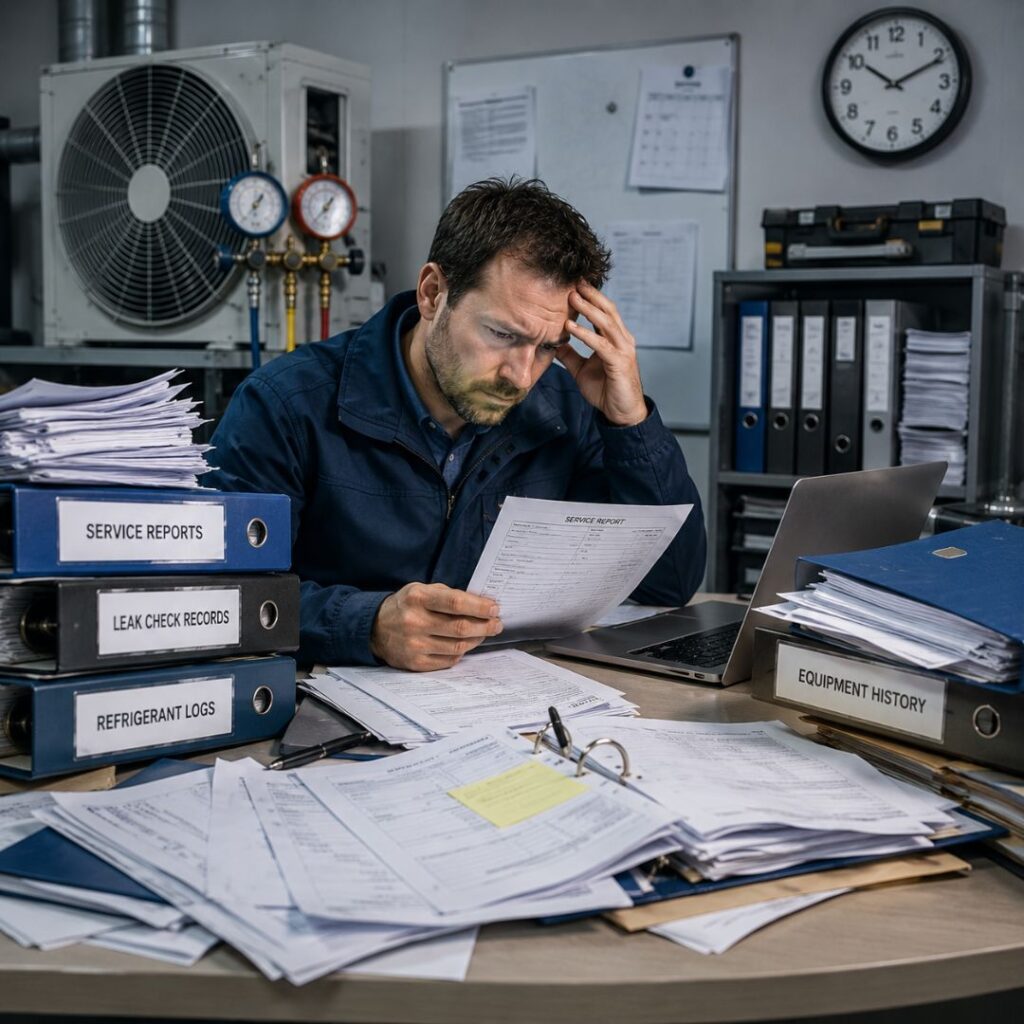
Many HVAC businesses still use paper service sheets as part of their daily workflow.
While paper records can work for individual jobs, they often create long-term management challenges.
Common issues include:
- Lost paperwork
- Damaged records
- Missing pages
- Illegible handwriting
- Delays in filing reports
- Difficulty locating older records
When an auditor requests information relating to a specific piece of equipment, searching through physical files can consume valuable time.
Digital service records provide a more organised and searchable alternative.
Mistake #2: Storing Records in Multiple Locations
One of the most common FGas record-management challenges is storing information across different systems.
For example:
- Service reports may be stored in filing cabinets.
- Customer information may be stored in spreadsheets.
- Engineer notes may be kept on mobile devices.
- Equipment information may be stored in separate software systems.
When records are fragmented, retrieving a complete service history becomes difficult.
The more places your team needs to search, the longer it takes to locate important information.
Mistake #3: Missing Equipment History
An audit may require businesses to review the historical servicing of specific equipment.
Problems arise when service records are not linked to the correct asset.
Without a connected equipment history, businesses may struggle to answer questions such as:
- When was the last service completed?
- Who carried out the work?
- What refrigerant activity was recorded?
- What repairs were performed?
Keeping service records connected to equipment records creates a clearer audit trail and makes historical information easier to retrieve.
Mistake #4: Incomplete Service Reports
A service report is only useful if the necessary information has been recorded.
Incomplete reports can create uncertainty and additional administrative work later.
Common examples include:
- Missing equipment details
- Missing technician information
- Incomplete service notes
- Missing dates
- Missing customer signatures
Even small gaps in documentation can become problematic when reviewing historical records.
A structured digital reporting process can help ensure required information is captured consistently.

Mistake #5: Delayed Data Entry
Many businesses collect service information in the field and then manually enter it into office systems later.
This process introduces several risks:
- Information can be forgotten
- Notes can be misplaced
- Data entry errors can occur
- Reports may be delayed
The longer the gap between completing a service visit and updating records, the greater the chance of missing information.
Capturing information digitally during the service visit can significantly improve record accuracy.
Mistake #6: Difficulty Finding Historical Records
One of the biggest frustrations during an audit is knowing the information exists but not being able to find it quickly.
Imagine being asked for:
- A specific leak-check report
- A historical service visit
- A refrigerant record
- An engineer’s service report
If locating that information requires searching multiple folders, emails, spreadsheets, and paper files, the process becomes unnecessarily complicated.
Fast access to records is often just as important as having the records themselves.
How Digital Service Records Can Help
Many FGas record-keeping challenges stem from one common issue: information is not centralised.
Digital service management systems help businesses bring customer records, equipment information, engineer activity, and service reports together in one place.
Benefits include:
- Faster record retrieval
- Reduced paperwork
- Improved organisation
- Better visibility of service history
- Easier access to historical records
- Improved operational efficiency
Rather than searching multiple locations, teams can access information through a central system.
How TykVen Helps HVAC Businesses Manage Service Records
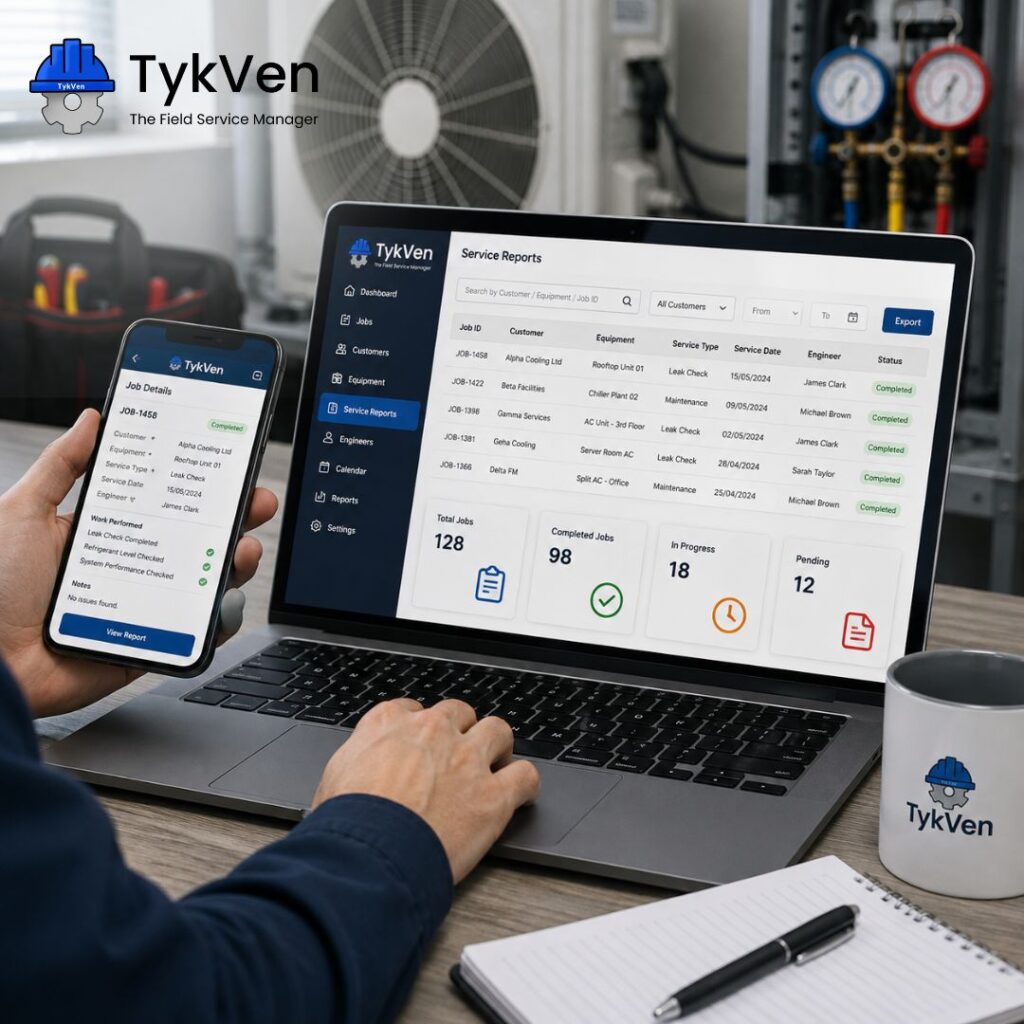
TykVen Field Service Management Software helps HVAC businesses maintain organised digital service records across their operations.
The platform enables businesses to manage:
- Customer information
- Equipment records
- Service requests
- Engineer assignments
- Digital service reports
- Service history
- Client Portal access for customers
Engineers can capture information directly from the field using the mobile app, while office teams can access records through the web platform.
Through the TykVen Client Portal, customers can submit service requests, track the status of ongoing work, view service history, and access completed service reports whenever they need them. This improves transparency and reduces the need for manual follow-ups.
By connecting customers, equipment, engineers, service reports, and customer access in one system, TykVen makes service information easier to manage and retrieve.
For businesses handling large numbers of service visits, this can significantly reduce the administrative effort involved in locating historical records while giving customers greater visibility into their service activities.
Final Thoughts
Many F-Gas audit challenges are not caused by missing work—they are caused by missing, incomplete, or difficult-to-find records.
By reducing reliance on paperwork, centralising service information, and maintaining consistent digital records, HVAC businesses can simplify record management and improve operational efficiency.
The easier it is to find the information you need, the easier it becomes to support your audit processes.