

How to Modernise Legacy Client-Server Applications for the Cloud
Many businesses still rely on legacy client-server applications that were built years ago to support critical business operations. While these systems may continue to function, they often struggle to meet modern business demands such as scalability, remote accessibility, cloud integration, and performance optimisation.
As digital transformation accelerates, organisations are increasingly looking for ways to modernise legacy client-server applications and move them to cloud-ready environments. Cloud modernisation not only improves system performance but also enables businesses to scale more efficiently, reduce infrastructure limitations, and support future growth.
In this blog, we’ll explore why modernisation matters, the challenges involved, and the best strategies for transforming legacy client-server applications into modern cloud-based platforms.
Why Legacy Client-Server Applications Become a Challenge
Traditional client-server applications were designed for a different era of computing. Most were built to operate within local networks and on-premise infrastructure, where scalability and remote access were not primary concerns.
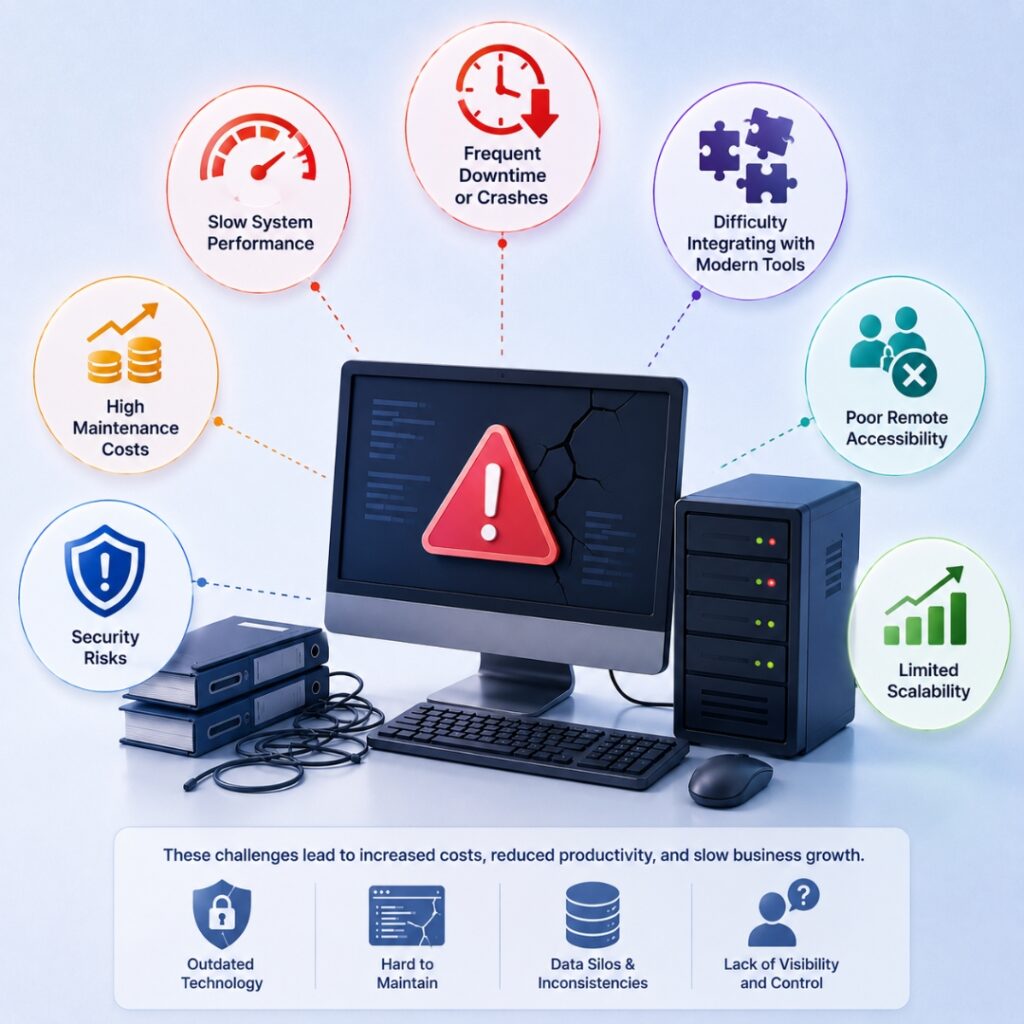
Over time, these applications often become difficult to maintain due to:
- Outdated technologies and frameworks
- Limited scalability
- Increasing maintenance costs
- Performance bottlenecks
- Integration limitations with modern systems
In many cases, businesses also face challenges in finding developers experienced in maintaining older technologies. This increases operational risks and slows down innovation.
As user expectations and business requirements evolve, relying on outdated client-server systems can restrict growth and reduce operational efficiency.
Benefits of Cloud Modernisation
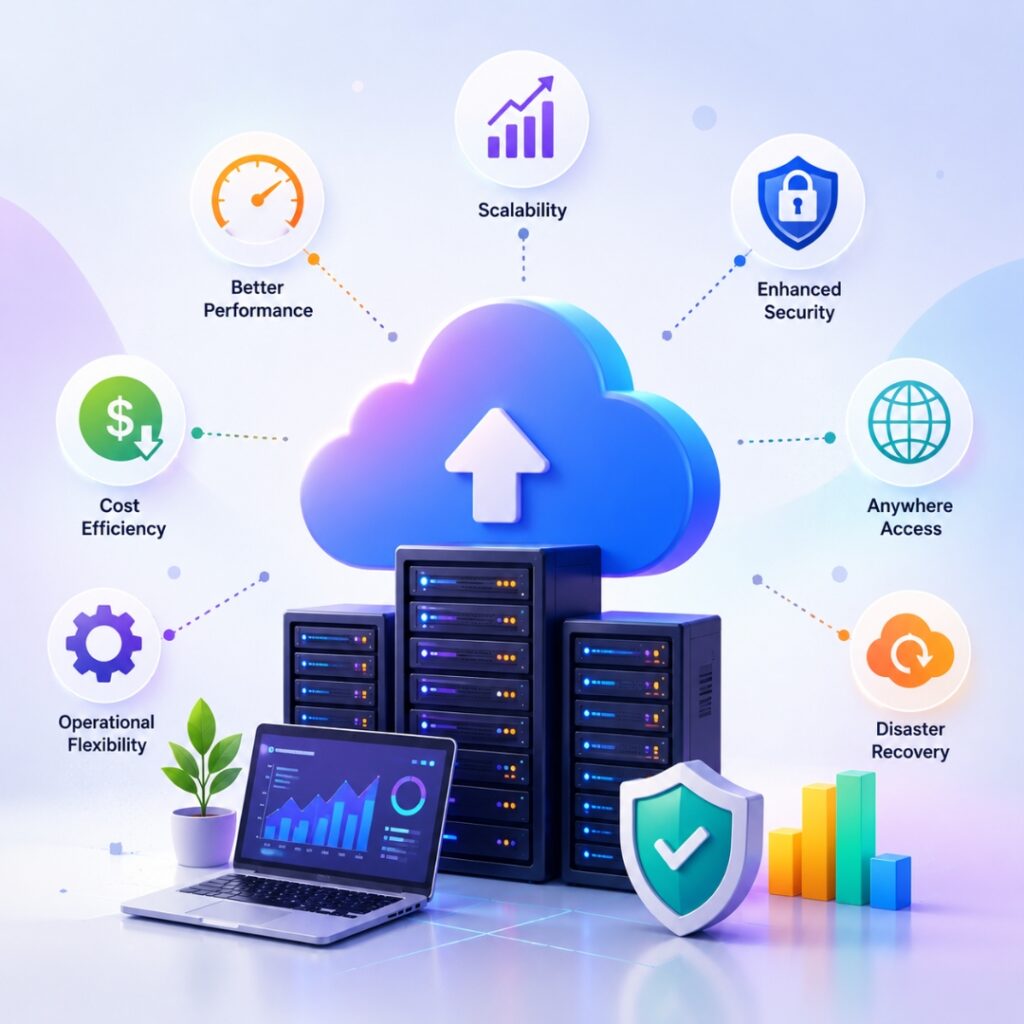
Modernising legacy client-server applications for the cloud provides several long-term benefits for businesses.
Improved Scalability
Cloud-based applications can scale resources dynamically based on usage and demand. This eliminates many of the limitations associated with traditional on-premise infrastructure.
Businesses can:
- Support growing user bases
- Handle higher workloads efficiently
- Expand operations without major infrastructure changes
Better Accessibility and Collaboration
Modern cloud applications enable secure access from anywhere, making remote work and distributed teams much easier to support.
This improves:
- Team collaboration
- Operational flexibility
- Accessibility across locations and devices
Enhanced Performance and Reliability
Cloud infrastructure provides improved uptime, load balancing, and performance optimisation compared to many legacy systems.
Modernisation can significantly improve:
- Application speed
- System stability
- User experience
Stronger Security and Compliance
Outdated applications often contain security vulnerabilities due to unsupported frameworks or obsolete infrastructure.
Cloud modernisation helps businesses implement:
- Modern security standards
- Data encryption
- Automated backups
- Disaster recovery solutions
This reduces risks and improves compliance readiness.
On-Premise Infrastructure vs Cloud Hosting: Understanding the Cost Difference
One of the key reasons businesses modernise legacy client-server applications is the long-term cost and scalability advantage offered by cloud hosting.
Traditional on-premise infrastructure often involves ongoing expenses such as:
- Server hardware and upgrades
- Maintenance and monitoring
- Power, cooling, and backup systems
- Software licensing and security management
As systems grow older, these costs increase while flexibility and scalability become more limited.
Cloud platforms like AWS, Azure, and Google Cloud provide a more scalable and cost-efficient alternative through usage-based pricing models. Businesses benefit from:
- Lower upfront investment
- Easier scalability
- Reduced infrastructure maintenance
- Better reliability and remote accessibility
While cloud migration requires proper planning, a well-structured cloud strategy can significantly reduce long-term infrastructure costs while improving performance, flexibility, and operational efficiency.
Signs Your Client-Server Application Is Holding Back Growth
Many legacy client-server applications continue running for years, but over time they often become barriers to efficiency, scalability, and business agility. While these systems may still support core operations, they are usually not designed for modern cloud environments, remote accessibility, or evolving business demands.
Some common signs that indicate your application may need modernisation include:
- Dependence on on-premise infrastructure
- Difficulty supporting remote or distributed teams
- Slow deployment and update cycles
- Increasing hardware and maintenance costs
- Limited integration with modern cloud services and APIs
- Performance issues as business operations grow
Businesses also face challenges when older systems rely heavily on outdated technologies or legacy database structures that are difficult to maintain and scale.
If your application is becoming harder to manage, limiting operational flexibility, or slowing down innovation, it may be the right time to modernise your architecture and move toward a cloud-ready environment.
Key Strategies for Modernising Legacy Applications
Cloud modernisation is not a one-size-fits-all process. The right strategy depends on the application’s complexity, business requirements, and long-term goals.
- Rehosting (“Lift and Shift”)
Rehosting involves moving the application to cloud infrastructure with minimal code changes.
This approach:
- Reduces infrastructure dependency
- Improves accessibility
- Speeds up migration timelines
However, it may not fully solve performance or scalability issues if the underlying architecture remains outdated.
- Refactoring the Application
Refactoring involves improving and restructuring the application codebase without changing core functionality.
This helps:
- Improve maintainability
- Reduce technical debt
- Enhance scalability and performance
Refactoring is often a practical approach for businesses that want long-term improvements without rebuilding the entire system.
- Rebuilding with Modern Architecture
In some cases, older systems may require a complete rebuild using modern technologies and cloud-native architecture.
This approach is ideal when:
- The existing architecture is too outdated
- Scalability limitations are severe
- The application requires major feature expansion
Modern cloud-native applications provide better flexibility, automation, and integration capabilities.
Real-World Modernisation Example
A retail distribution company operating a legacy desktop-based inventory and order management application modernised its platform by migrating to cloud infrastructure and refactoring critical modules for web accessibility.
The organisation faced increasing challenges with remote access, hardware maintenance, backup management, and slow software deployment cycles across multiple branch offices.
After modernisation, the business achieved:
• Reduced infrastructure and maintenance costs
• Improved accessibility for distributed teams
• Faster deployment and software updates
• Better disaster recovery and backup management
• Improved scalability during seasonal demand increases
The migration also enabled integration with mobile applications, third-party logistics systems, and cloud-based analytics tools, significantly improving operational efficiency and business visibility.
The Importance of Cloud Infrastructure
Choosing the right cloud infrastructure is critical for successful modernisation.
Platforms like AWS provide:
- Scalable infrastructure
- High availability
- Improved disaster recovery
- Better performance management
Cloud infrastructure also enables businesses to adopt modern DevOps practices such as:
- Continuous deployment
- Automated monitoring
- Infrastructure scaling
This creates a more efficient and future-ready development environment.
Integrating Modern Technologies into Legacy Systems
Modernisation also provides an opportunity to introduce new capabilities into existing business applications.
Businesses can integrate:
- APIs and third-party services
- Mobile accessibility
- Automation workflows
- AI-powered features and analytics
However, these integrations require careful planning to ensure compatibility and performance stability.
A structured engineering approach helps ensure smooth integration while minimising operational disruptions.
Why the Right Development Team Matters?
Modernising legacy client-server applications requires more than technical migration. It demands strategic planning, architectural expertise, and long-term scalability thinking.

The right engineering team should understand:
- Legacy application architecture
- Cloud migration strategies
- Scalability optimisation
- Security best practices
- Modern development frameworks
Equally important is the delivery structure.
Teams operating under a structured Project-Oriented Delivery (POD) model provide:
- Faster execution
- Better accountability
- Dedicated ownership of project modules
- Consistent development quality
This approach ensures cloud modernisation projects remain organised and scalable throughout the process.
Looking to Modernise Legacy Applications for the Cloud?
At LoreMine, we help businesses modernise legacy client-server applications using scalable cloud infrastructure, dedicated engineering teams, and structured POD delivery models.
From cloud migration and application refactoring to performance optimisation and modern architecture development, our experienced engineers help businesses build reliable, future-ready platforms.
Planning to modernise your legacy applications? Our engineering teams help businesses migrate client-server systems to scalable cloud-ready platforms using structured POD delivery models, modern architectures, and cloud infrastructure best practices.
Talk to our engineers today to modernise your Legacy Applications
Final Thoughts
Legacy client-server applications may continue functioning for years, but outdated infrastructure and architecture can eventually limit business growth and innovation.
By modernising applications for the cloud, businesses can improve scalability, performance, accessibility, and long-term maintainability. The process requires careful planning, the right technologies, and experienced engineering teams capable of managing complex migrations effectively.
Cloud modernisation is ultimately an investment in future growth, agility, and operational resilience.